
RevOps performance starts with consistent customer journey intake
RevOps teams need intake that keeps customer journey stages clear, routing consistent, and data ready for forecasting. When data enters Salesforce with inconsistent fields or unclear ownership, handoffs slow down and response times slip. A strong intake foundation keeps records aligned, reduces rework, and supports reliable reporting across teams. The focus is consistency from the first touch.
What RevOps needs from intake workflows
RevOps relies on intake that stays consistent across teams and stages. Lead and request data should enter Salesforce with clean fields, clear ownership, and customer journey context intact. When intake is controlled, routing stays reliable, handoffs remain reliable, and reporting lines up across functions. The goal is simple: keep signals consistent and data ready for forecasting.
Customer journey stage consistency
RevOps needs stage definitions applied the same way across channels and teams so customer journey signals stay comparable. Intake should capture the right stage context at creation and preserve it through handoffs. Consistent stage data reduces disputes, supports accurate reporting, and keeps response times aligned.
Lead and opportunity routing accuracy
Routing rules only work when intake data is complete and consistent. RevOps needs reliable ownership assignment, clear routing inputs, and standardized source fields so leads and opportunities move to the right team without manual intervention. Accuracy here prevents stalled handoffs and keeps response response times intact.
Forecast-ready data quality
Forecast-ready reporting depends on clean, complete fields from the first capture. RevOps needs consistent values for stage, amount, and close timing, plus required fields captured at intake so later updates are exceptions rather than the norm. This keeps forecasting stable and defensible.
Keep handoffs and response times reliable
Handoffs across marketing, sales, and service depend on intake that is consistent and clearly owned. When the first record is incomplete or inconsistently routed, response times slip and teams spend time reconciling ownership instead of acting. RevOps needs intake control that keeps routing rules stable, reduces exceptions, and preserves the fields that drive downstream actions. Reliable handoffs also make performance reporting more comparable across teams and time. The aim is to keep handoffs fast without creating manual cleanup steps.
Clear ownership and routing rules
RevOps needs ownership rules that are consistent across sources so records land with the right team the first time. Clear routing inputs, like source, region, and segment, reduce reassignment loops and keep response time timers tied to the correct owner. This avoids gaps when responsibilities change.
Standardized intake fields and naming
Standardized fields ensure that customer journey stage, segment, and channel data mean the same thing across teams. RevOps benefits from shared picklists and consistent naming so reporting and handoff logic stay aligned. A stable naming prevents one-off values that break routing and analysis.
Fewer downstream corrections
When intake is consistent, RevOps spends less time fixing records or chasing missing fields after handoff. Cleaner inputs reduce response time exceptions and minimize rework across teams. That keeps processes reliable and lets teams focus on execution instead of record cleanup.
Intake patterns RevOps supports
RevOps supports intake across multiple sources where customer journey signals, routing accuracy, and forecast-ready data quality matter. These patterns show up in lead capture, partner and referral submissions, and post-sale feedback. The common risk is inconsistent fields that break stage definitions and handoff response times. A consistent intake approach keeps ownership clear, preserves customer journey context, and reduces rework so downstream teams can act without renegotiating who owns the record or what stage it is in.
Lead capture and qualification
Lead intake should capture the fields needed for routing, customer journey stage, and ownership from the start. RevOps needs consistent qualification data, source context, and required fields so handoffs are fast, response times are measurable, and reporting aligns across teams and channels.
Partner and referral intake
Partner and referral submissions need clear source info, account context, and routing inputs. RevOps needs these records to enter Salesforce with standardized fields, consistent stage signals, and accountable ownership so follow-up stays consistent and partner reporting does not require manual normalization.
Customer feedback and expansion signals
Feedback intake should keep account stage, ownership, and request context together. RevOps needs those signals tied to the right records so follow-up is consistent and reporting stays accurate without extra cleanup.
Recommended guides
These guides cover native setup and data control for Salesforce intake. Use them to align RevOps and teams on customer journey consistency, routing accuracy, and forecast-ready data before formalizing intake standards.
 Native Salesforce Forms
 Salesforce Data Collection Best Practices
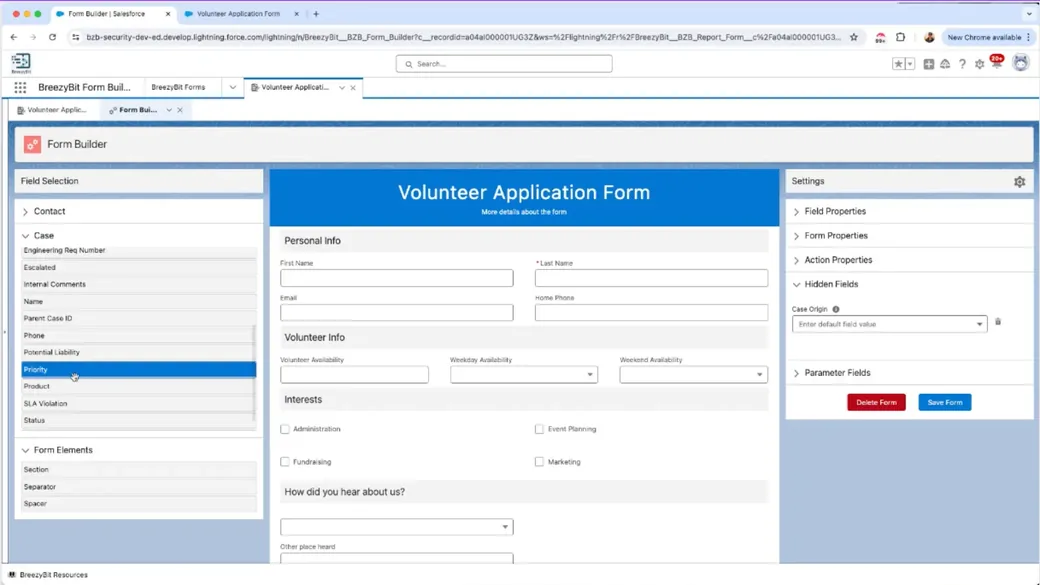 Salesforce Form Builder Guide

Start fast
If you're standardizing RevOps intake and handoffs, start with a quick walkthrough or the guides to see what fits your org.
Choose the path that matches your review process.
Get a working form flow today and scale to every use case.